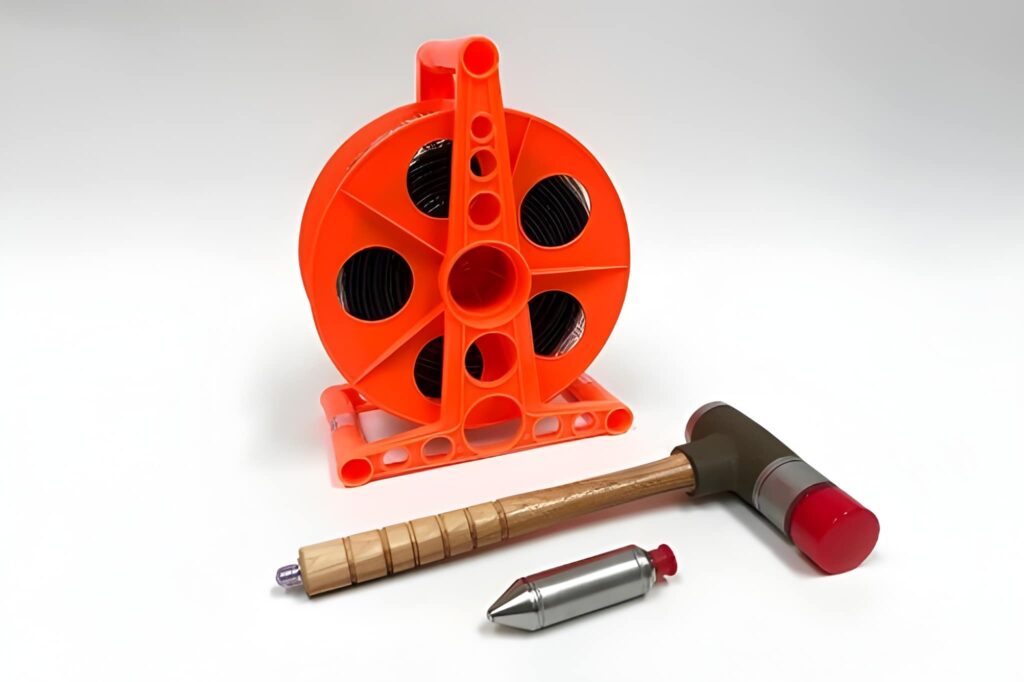
Parallel Seismic is more accurate, more versatile than other non-destructive surface techniques for determination of unknown foundation depths. Parallel Seismic (PS) systems are designed to determine the length and integrity of foundations when the top is not accessible or when the pile is too long and slender to test with echo techniques, or below a buried pile cap. Ultimately, Parallel Seismic testing provides information concerning the length and compressional velocity of foundations and can be used on concrete, wood, masonry, and steel foundations. This method also provides information about the soil below the foundation bottom. Note: Parallel Seismic requires the installation of a grouted, cased borehole.
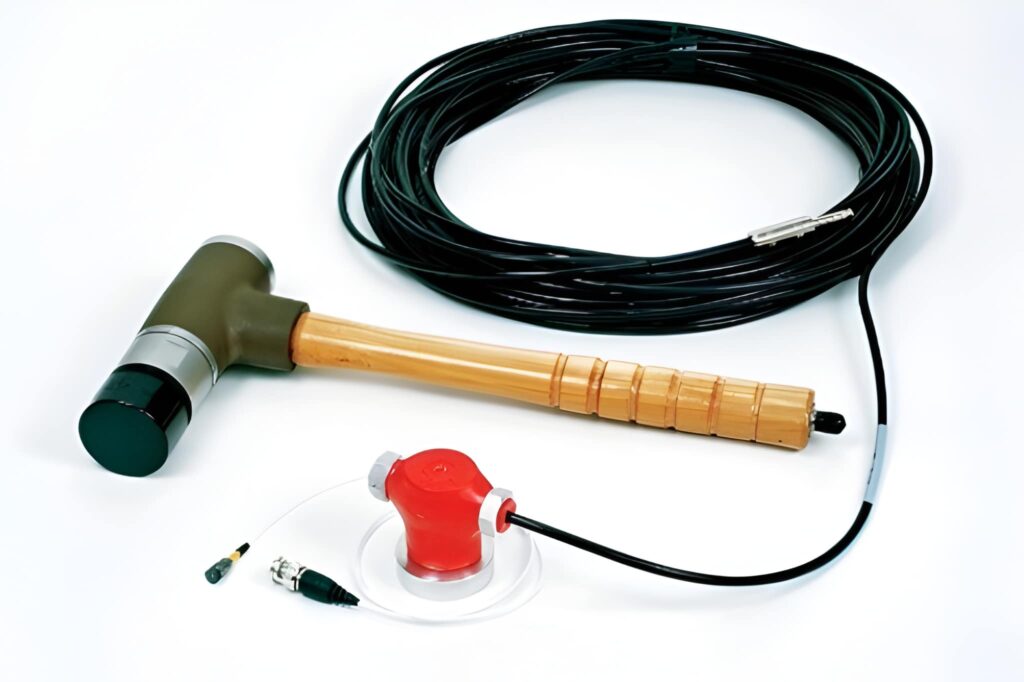
The Sonic Echo-Impulse Response test method (also known as the Pile Integrity Test, or PIT) is designed to determine the length and integrity of foundations when the top or part of the upper side of the foundation is accessible. This method can be used on both new and existing foundations and is performed by impacting the foundation and recording echoes from a defect or the foundation bottom with a nearby receiver(s). This Pile Integrity Test method works best for columnar type foundations such as piles and drilled shafts, but has also been used successfully on mat foundations, abutment walls, and similar structures. Sonic Echo-Impulse Response is applicable on concrete, wood, and round steel pipe foundations.
Impact Echo (IE) investigations are performed to assess the condition or thickness of slabs, beams, columns, walls, pavements, runways, tunnels, and dams. The Impact Echo (IE) system is designed to determine the condition and thickness of concrete, wood, stone, and masonry structural members when voids, honeycomb, and/or cracks are suspected. IE investigations can also be performed to predict the strength of early age concrete if the member thickness is known. Lastly, the IE method will provide information on the depth of a flaw or defect, in addition to mapping its lateral location and extent. An advantage of the IE method over the Ultrasonic Pulse Velocity (UPV) method is that only one side of the structure needs to be accessible for testing.
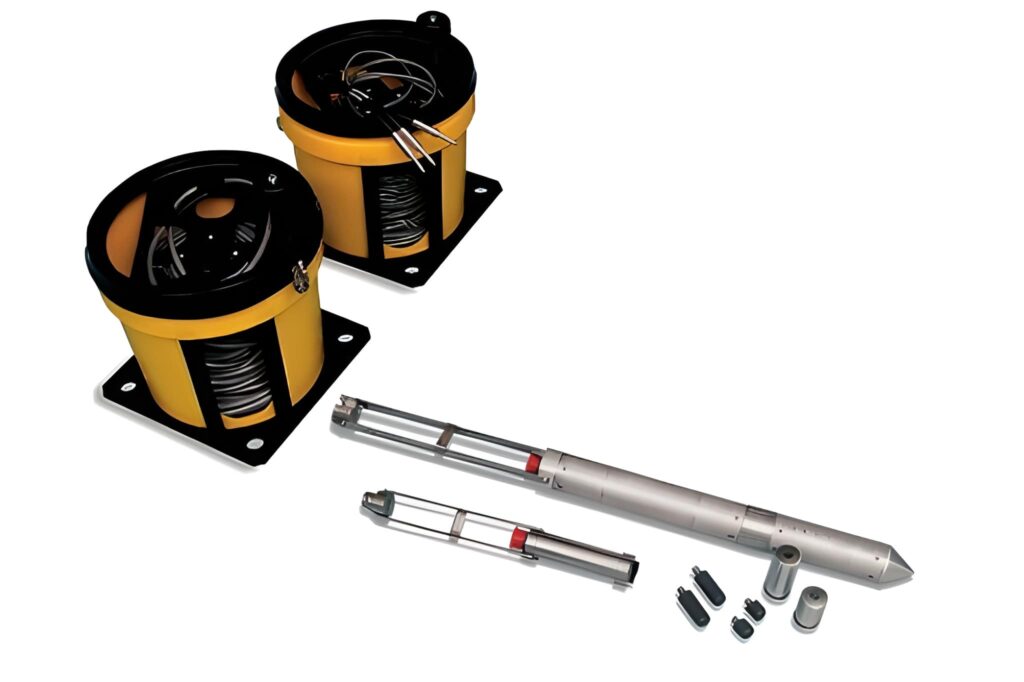
The Crosshole Seismic (CS) system and method determine shear and compressional wave velocity versus depth profiles. From these measurements, parameters, such as Poisson’s ratios and moduli, can be easily determined. In addition, the material damping can be determined from CS tests. These dynamic soil and rock properties are often utilized for earthquake design analyses necessary for certain structures, liquefaction potential studies, site development, and dynamic machine foundation design. The most complete version of this downhole system, as manufactured by Olson Instruments, is comprised of a borehole source capable of generating shear and compressional waves and a pair of matching three component triaxial geophone receivers. These instruments are lowered to the same depth in boreholes set at ~ 10 ft (3 m) apart in a line. The instruments are coupled to the side of the grouted borehole inclinometer casing, allowing for the detection of shear and compressional waves as they pass between the receivers.