- Your cart is empty Browse Shop
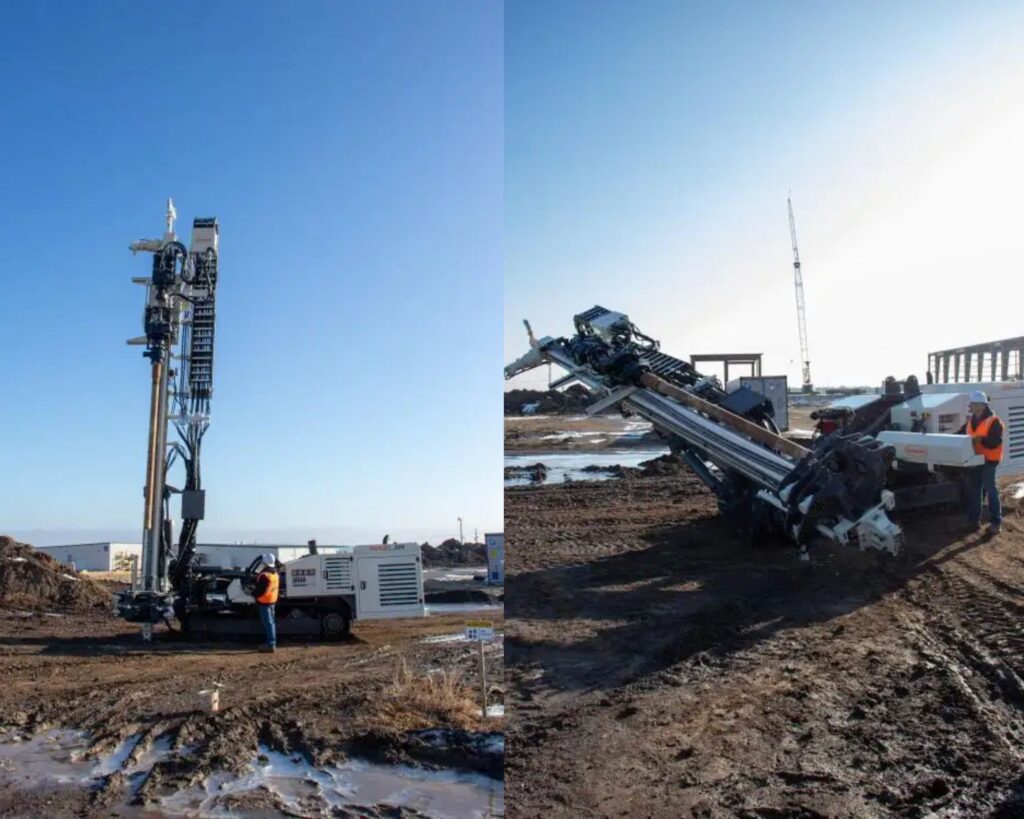
Foundation Drill Rig
Engineered to withstand the rigors of heavy daily production, Foundation Drill Rig stands out as a highly reliable choice for demanding construction applications. It features an exceptional front-the-wall kinematic design with seven joints, allowing for versatile and precise mast positioning well-suited for installing micropiles, tieback anchors, and soil nails. Driven by a powerful 275 horsepower CAT® engine, this robust rig incorporates a high-performance breakout system offering an impressive 40 inches of top clamp travel. Operators benefit from durable, predominantly mechanical controls that provide long-term reliability and straightforward operation directly on the job site. Furthermore, the service-focused layout utilizes strategic plumbing and multiple bulkheads around the engine compartment to simplify hose troubleshooting and reduce downtime. Finally, the integration of new drill rig telemetry enables companies to easily track performance, monitor fuel use, and manage live diagnostic data from the office.
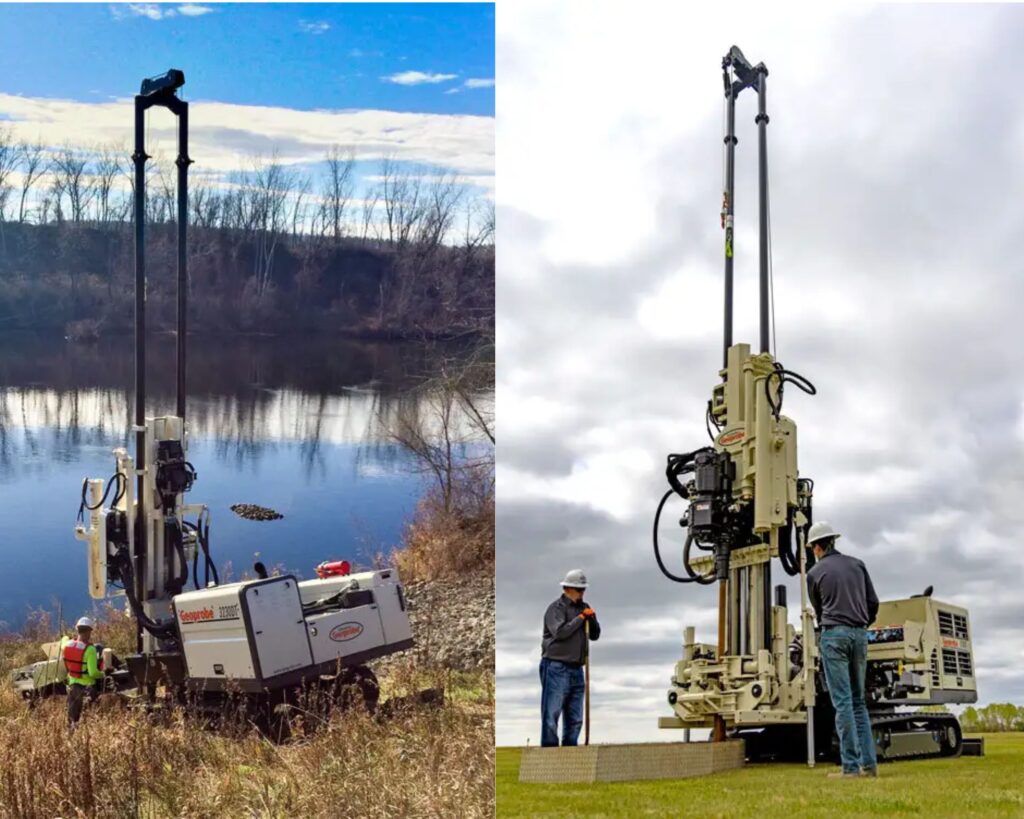
Geotechnical Drill Rig
The 3230DT drill rig offers exceptional versatility by allowing drillers to perform both rotary drilling and direct push sampling with a single machine. Equipped with a straight and rigid top-head driven design, the latest model features increased horsepower and fuel-saving hydraulics for maximized footage. It boosts productivity and expands applications by enabling quick transitions between geotechnical augering, high-speed rock coring, and advanced direct push capabilities. Safety is significantly enhanced through a double breakout system and an adjustable swing-arm control panel that protects operators. Furthermore, precise feed rate and weight-on-bit controls give new drillers the immediate confidence and insight of a 30-year veteran. Ultimately, companies find training new operators much easier thanks to the rig’s intuitive digital readouts, straightforward operation, and available factory training options.
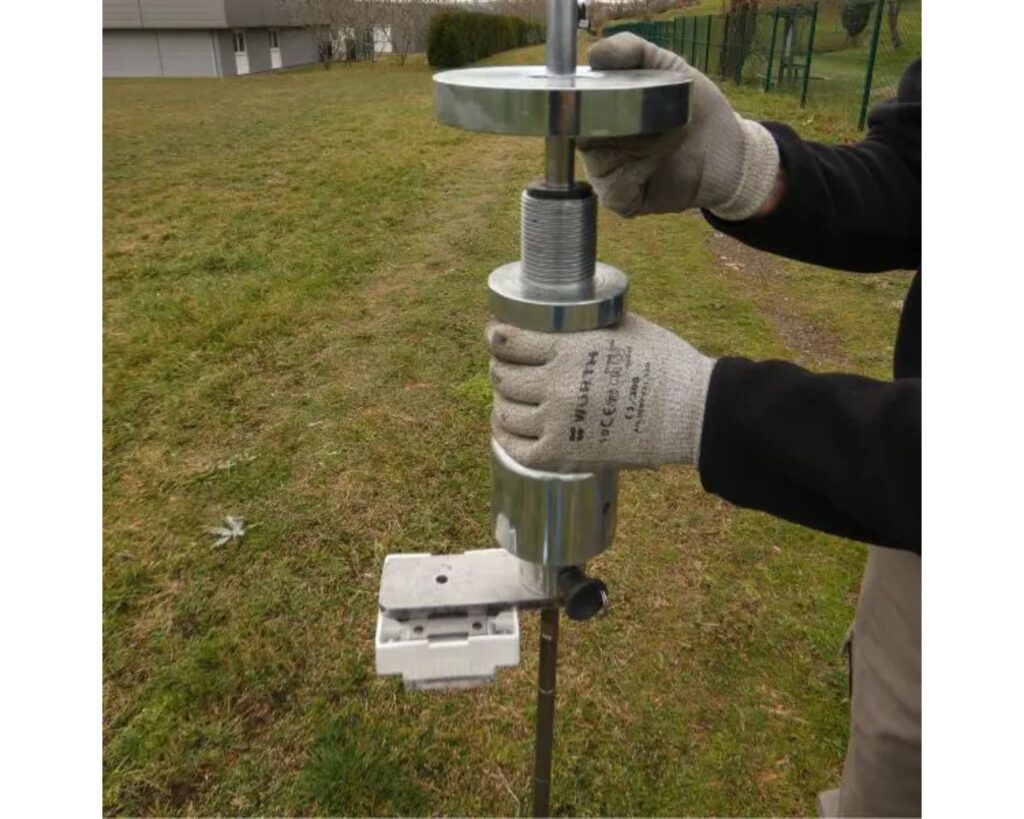
Lightweight Dynamic Cone Penetrometer with Variable Energy
Sol Solution is an advanced, lightweight, variable-energy dynamic cone penetrometer (DCP) engineered for accurate compaction control and geotechnical soil characterization. Designed for single-person operation, the highly portable device enables field operators to manually deliver strikes with a hammer while built-in electronic sensors automatically record the exact depth and variable impact velocity of each blow. This real-time tracking eliminates manual calculation errors and provides an instantaneous readout of dynamic cone resistance (in MPa) down to a sounding depth of up to 6 meters. The system includes integrated GPS data collection and features a built-in touchscreen terminal where users can compare soil profiles on-site against standardized material classification databases like USCS and AASHTO. Finally, the collected data feeds seamlessly into the cloud-based WebSprint© software to map layers, flag anomalies, filter out rod skin friction, and automatically correlate results with other parameters like CBR, CPT, and SPT values.
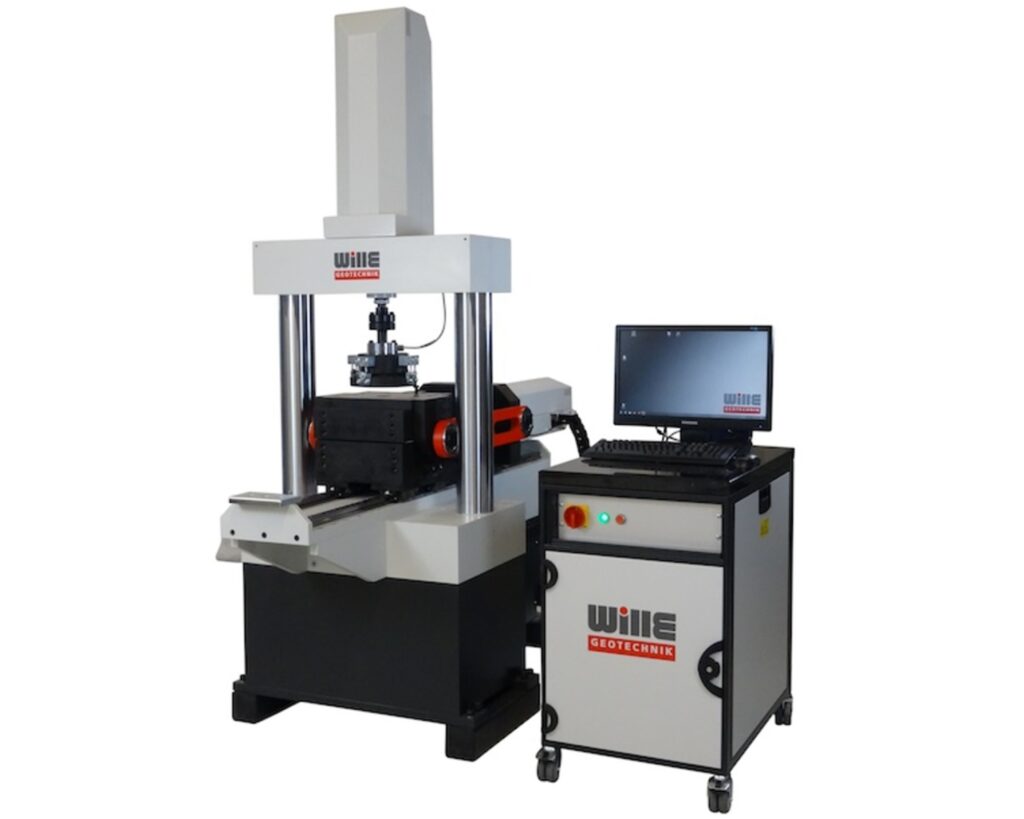
Rock Direct Shear Apparatus (Electromechanical)
The Electromechanical Rock Direct Shear Testing Apparatus is designed to determine the shear strength of intact or jointed rock and concrete specimens. It can test cylindrical, prismatic, cubic, and irregular samples of various sizes. The system features a closed-loop servo-controlled mechanism with a stiff dual-frame structure for vertical and shear loading, minimizing friction and torque effects. It ensures high accuracy in measuring shear behaviour under controlled conditions. The system is fully automated and operated through GEOsys software with multiple sensors, transducers, and customizable testing options.
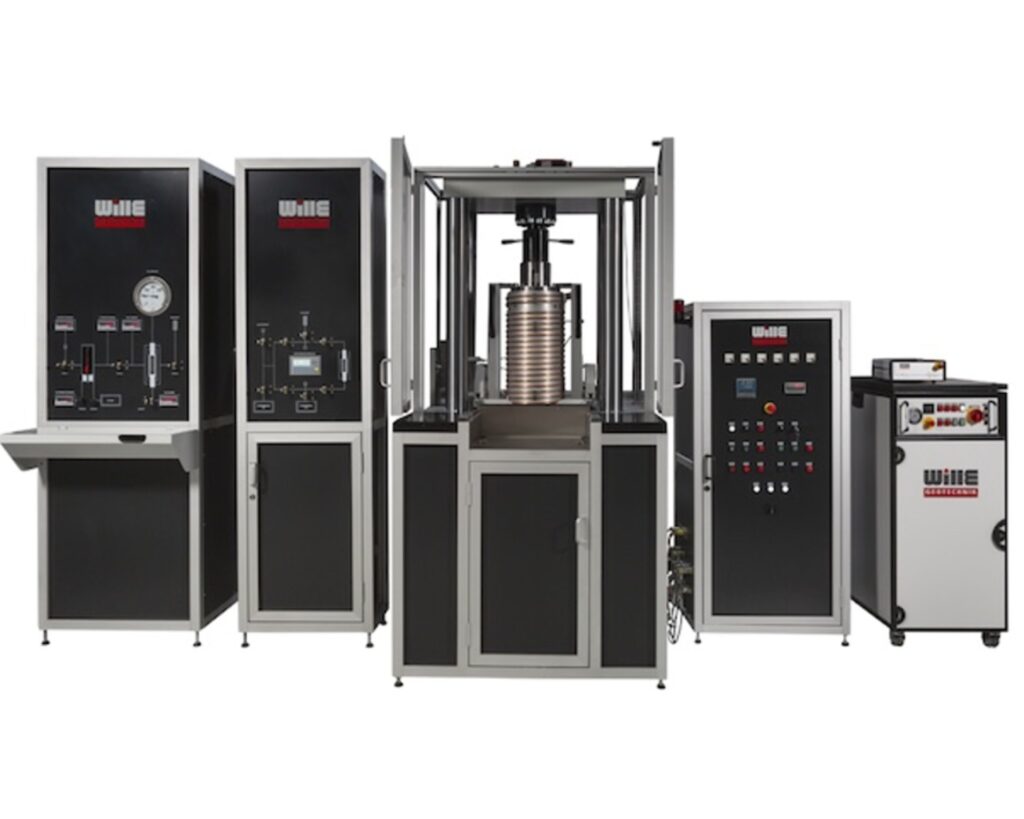
Rock HP-HT Gas Medium Triaxial System
In the 1960s–80s, Prof. Mervyn Paterson at the Australian National University developed a unique gas-media deformation apparatus. Building on this concept, APS-Wille Geotechnik introduced an upgraded high-pressure, high-temperature internally heated pressure vessel system in 2018 for advanced rock triaxial testing. The system uses gas as the pressure medium to simulate axial stresses corresponding to depths of approximately 13 km. It is designed for complex rock mechanics experiments under elevated pressure–temperature conditions. The apparatus also enables measurement of pore structure, fluid and gas permeability, and related rock properties.

Rock Polyaxial Testing System
The Polyaxial Rock Testing System is a customized experimental setup designed to study rock behaviour under independent three-dimensional stress states (σ₁ ≠ σ₂ ≠ σ₃). It is widely used in geothermal, petroleum, mining, geotechnical, and geophysical research applications. The system can test materials ranging from granite to mudstone, including post-failure behaviour of brittle rocks. It applies controlled stresses on cubic samples up to 300 mm with capacities up to 2000 kN or higher on request. Optional features include temperature control up to +200°C, pore pressure systems, acoustic emission monitoring, ultrasonic testing, hydrofracturing, and permeability measurements.
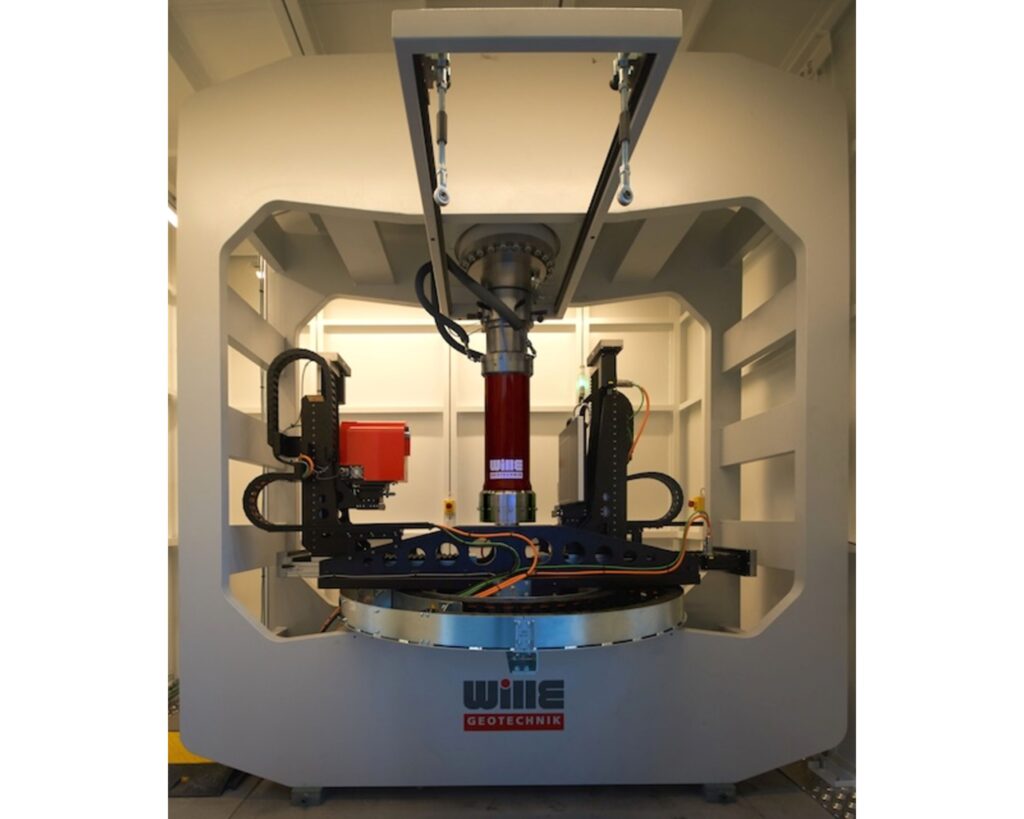
“SYNCHRO CT” Triaxial Testing System
The X-Ray CT Compatible Triaxial Testing System is an advanced solution for static and dynamic geotechnical testing with real-time visualization capabilities. Featuring an X-ray transparent triaxial cell for low- and high-pressure applications, the system enables in-situ monitoring of specimen deformation, porosity changes, crack propagation, fluid flow, crystallization, dissolution, and pre- and post-failure behaviour during testing. Its flexible design also supports future upgrades, including μ-CT imaging, acoustic emission (AE), electrical resistivity tomography (ERT), custom test fixtures, and environmental chambers, making it ideal for advanced research applications
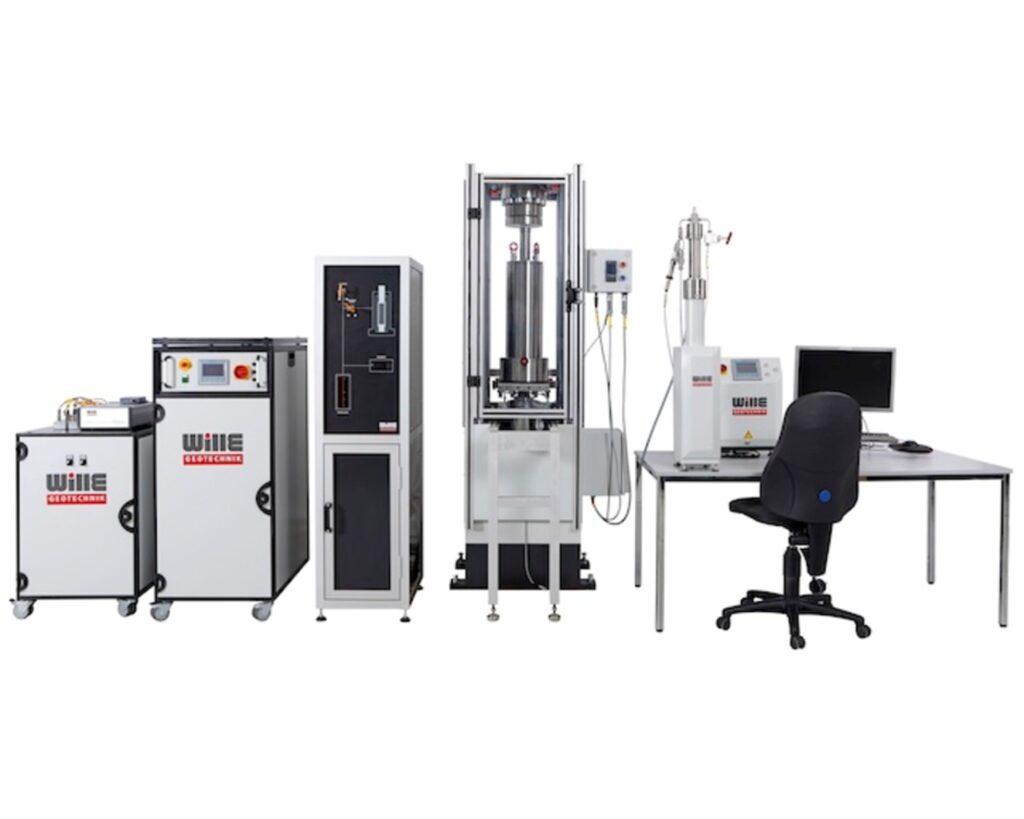
Rock Triaxial Test System
The Advanced Rock Testing System is a fully integrated solution designed to meet ASTM and ISRM requirements for rock mechanics’ research. Equipped with a rigid hydraulic load frame, hydraulic power pack, and high-pressure/high temperature triaxial cell, it supports a wide range of tests, including uniaxial compression, triaxial strength, indirect tensile, permeability, hydraulic fracturing, creep, and post-failure analysis. Suitable for testing materials from soft sandstone to hard rock, the system is widely used in mining, tunnelling, geothermal energy, and oil and gas applications. Integrated GEOsys software provides fully automated test control, customizable testing procedures, and real-time data visualization for efficient and accurate analysis.
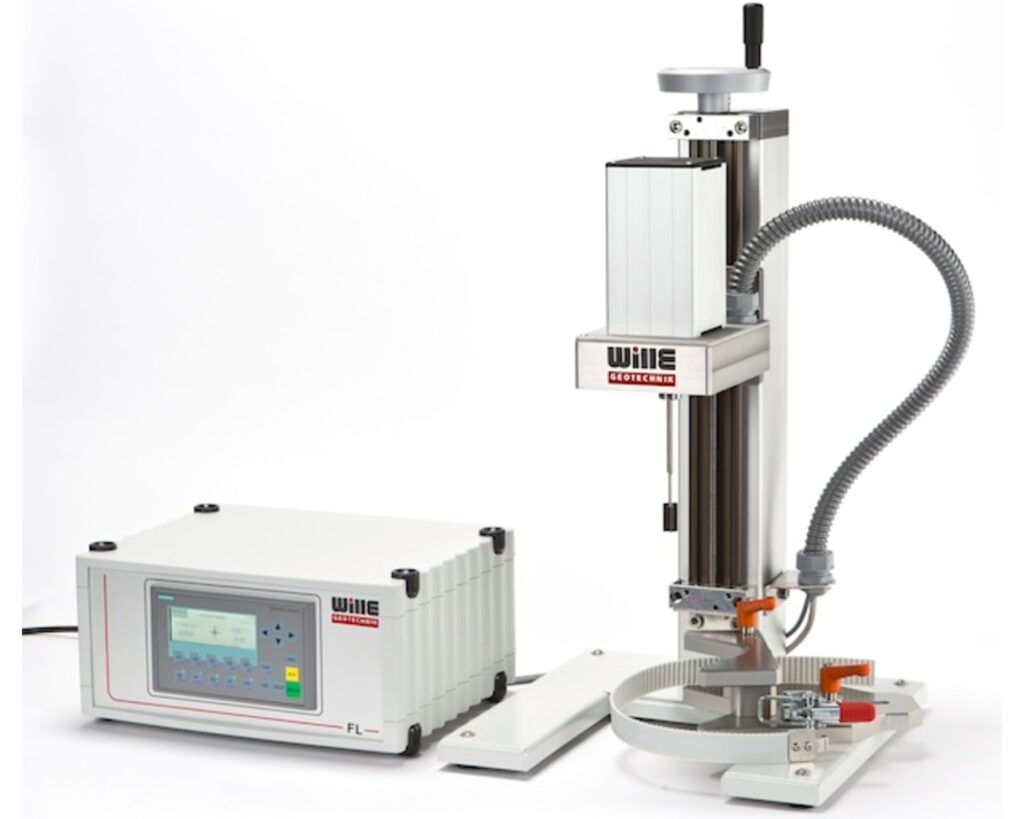
Fully Automatic Laboratory Vane Shear System
The Fully Automatic Laboratory Vane Shear Testing System is designed to determine the undrained shear strength of cohesive soils, particularly soft clays, through rapid vane shear testing. Developed according to the latest research and testing requirements, it accommodates a wide range of specimen types, including undisturbed, compacted, and artificially prepared samples. The system offers fully automated operation with advanced data acquisition and evaluation software, providing accurate, reliable, and economical soil strength assessment for both research and routine geotechnical laboratory applications.
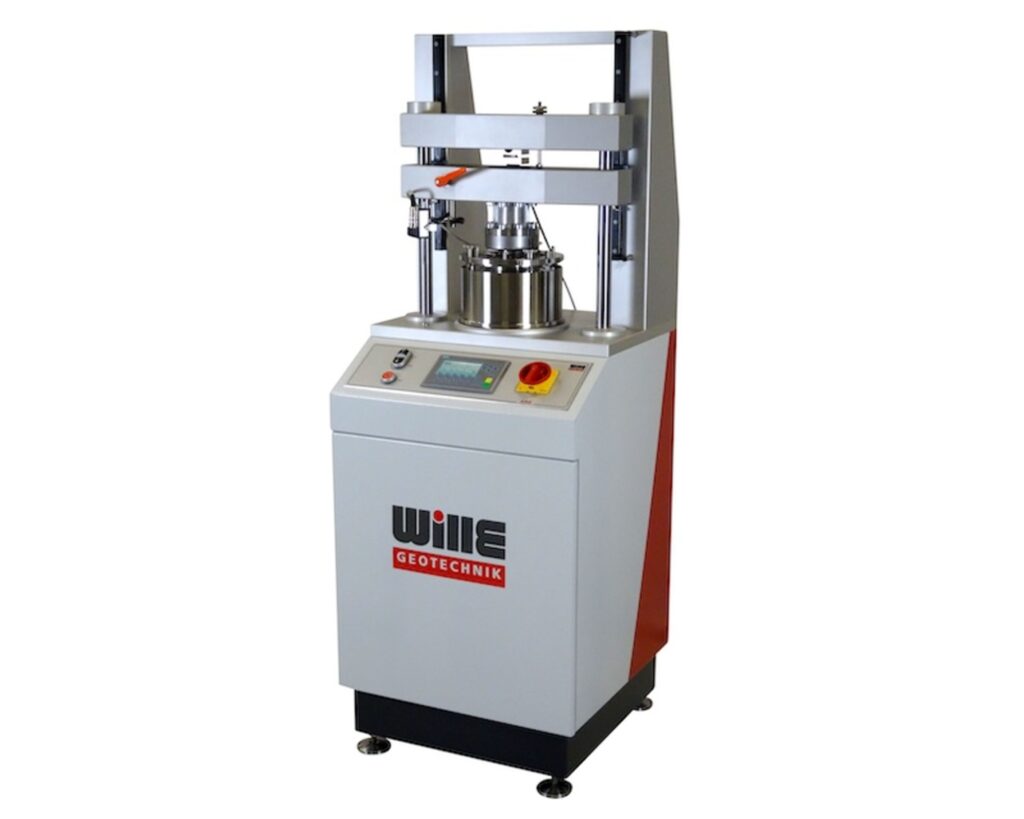
Static Ring Shear Apparatus
The Electromechanical Ring Shear Apparatus is a robust and high-precision system designed for determining the drained residual strength of soils under continuous shear conditions. Equipped with independent vertical and torsional actuators, it provides precise control of normal and shear loads in load, displacement, or velocity modes. Unlike conventional direct shear devices, it allows virtually unlimited shear displacement while maintaining a constant shear area throughout the test. Suitable for specimens up to 200 mm outer diameter and 150 mm inner diameter, the high-stiffness frame ensures accurate, reliable, and repeatable results for both research and routine geotechnical testing.

Bishop Ring Shear Apparatus
The Advanced Bishop Ring Shear Apparatus is a high-precision torsional shear testing system based on the pioneering concepts developed by Bishop and his team for investigating post-peak shear behavior and residual strength of soils, particularly clayey materials associated with slow-moving landslides. Equipped with independent electromechanical actuators, high-resolution transducers, and premium mechanical and electronic components, the system delivers accurate, reliable, and repeatable results. Designed to accommodate large specimens up to 200 mm outer diameter and 150 mm inner diameter, its high-stiffness frame ensures exceptional measurement accuracy for advanced geotechnical research and routine laboratory testing.

Geotextile Pull out Testing Apparatus
The frictional characteristics of a soil-geosynthetic interface can be determined by direct shear and pull-out tests while soil–geosynthetic interaction parameters and their determination play important role in the design of reinforced soil structures. The large direct shear test can be upgraded to run pull out test on the same sample size of main device for evaluating the soil–geosynthetic interaction parameters under pullout, but this upgrading order must be placed before starting of construction. This upgrading increases the length of the main direct shear device.

Simple Shear Apparatus
The standalone electromechanical direct shear testing apparatus is a robust and high-precision system designed for accurate determination of soil shear properties on specimens up to 100 mm in size. Independent electromechanical actuators provide closed-loop control of normal and shear loads, enabling precise load, displacement, and velocity-controlled testing. High-quality double linear guides minimize friction and prevent tilting, ensuring reliable and repeatable results. Integrated GEOsys software automates test control, data acquisition, and analysis, making the system ideal for both research and routine laboratory applications.
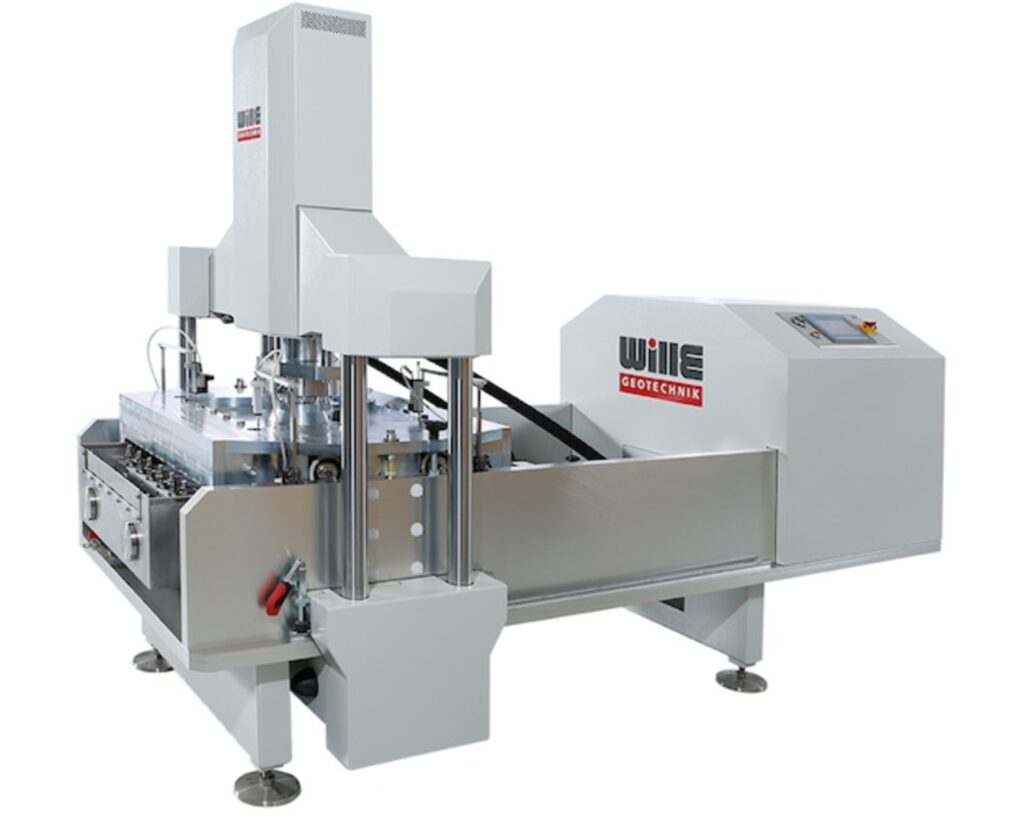
Large Direct Shear Test Apparatus
The Automated Large Direct Shear Apparatus is a high-performance, floor-mounted testing system designed in accordance with ASTM, ISO, EN, and DIN standards. It is used to determine the shear and interface friction properties of soils, aggregates, gravels, geosynthetics, asphalt, concrete, and other construction materials. Capable of testing large specimens up to 1000 × 1000 mm, the system offers automated operation with axial and shear load capacities up to 250 kN and beyond, delivering accurate, reliable, and highly repeatable test results for both research and commercial applications.
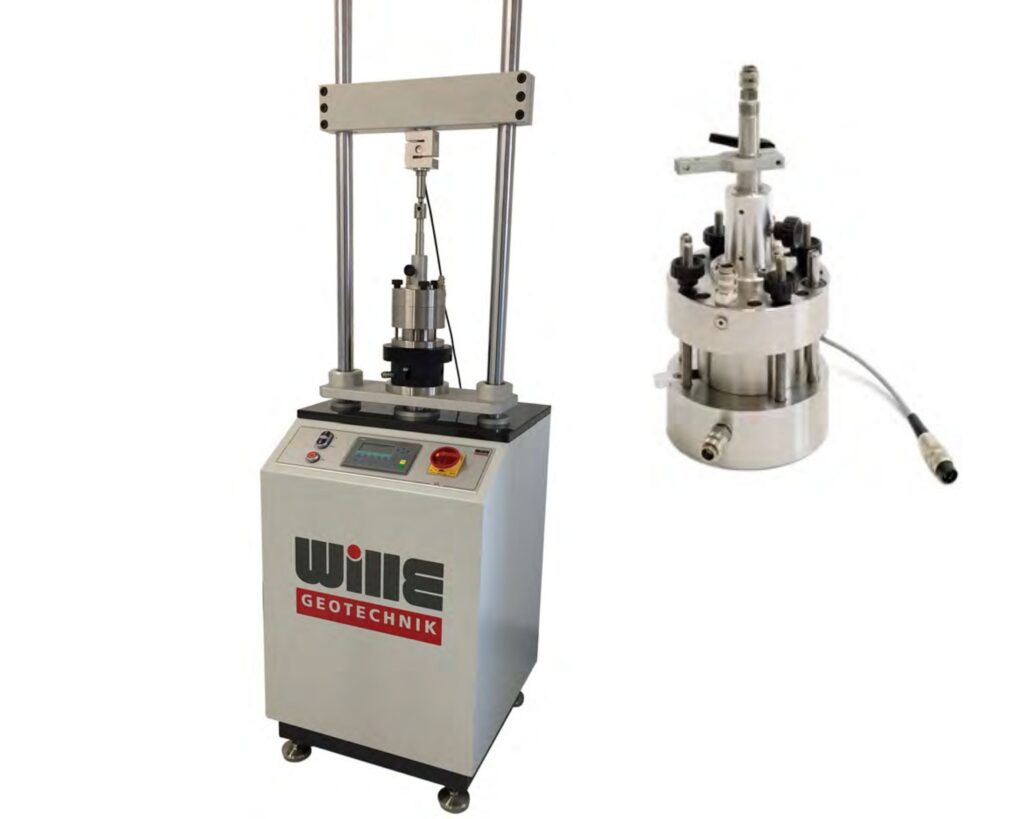
Fully Automatic Electromechanical Consolidation Apparatus
The Automatic Electromechanical Consolidation Testing System is a high-precision, microprocessor-controlled apparatus designed for one-dimensional consolidation testing. It supports fully automatic incremental and optional continuous loading tests, enabling accurate determination of consolidation properties and Young’s modulus. Compatible with a wide range of standard and advanced consolidation cells, the system accommodates various specimen sizes and can be configured for pore pressure and permeability measurements. A user-friendly control unit with keypad and LCD display allows easy operation, calibration, and test monitoring, making it ideal for both research and routine geotechnical applications.
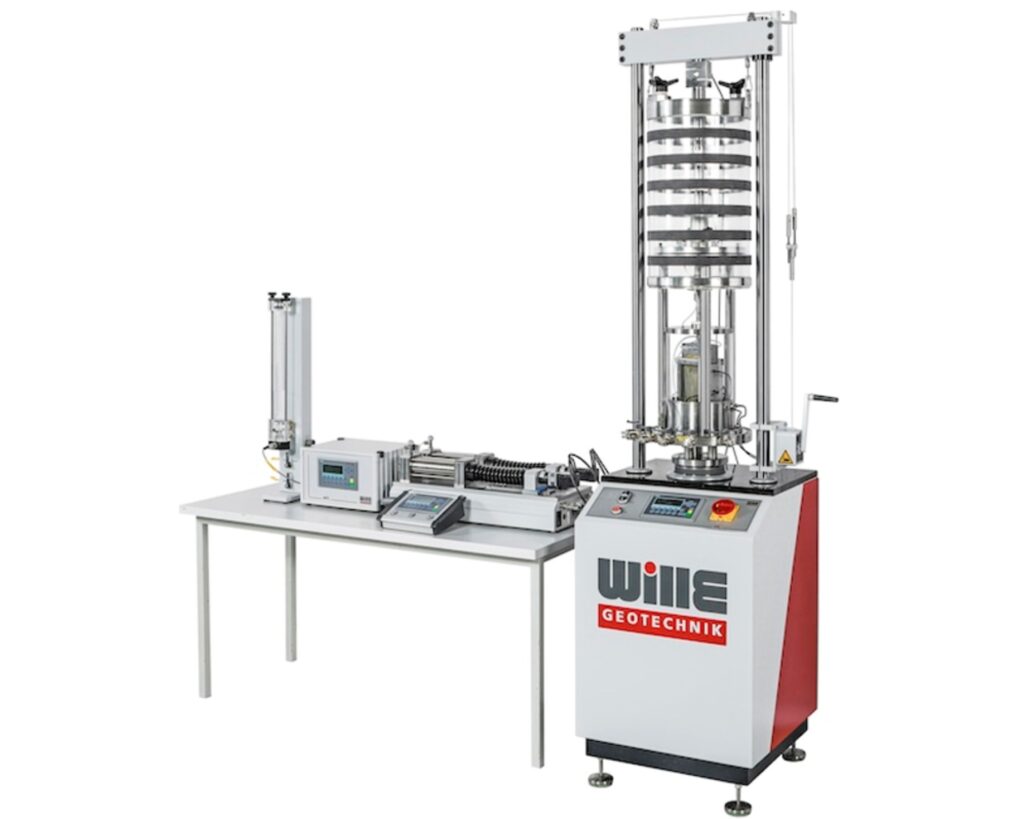
Plane Strain Apparatus (PSA)
This Plane strain apparatus is designed and manufactured to study mechanical properties and shear band failure of soil and generates and controls sophisticated stress/strain paths. In the plane-strain state the deformation of the soil is, approximately, zero in one direction for example the long dimension of the structure and the soil is free to deform in the other two directions. Some examples of the plane-strain state are Long retaining walls, embankments, strip foundations, and slopes. The apparatus is designed for the testing of a soil specimen in a rectangular cuboid with dimensions up to 120x100x40mm (LxDxH) under confined conditions. There is a possibility to embed submersible pressure transducers which are available in different ranges up to 1000KPa in the two stainless steel vertical platens of the PSA apparatus. This gives the possibility to measure sigma 2 at four points. Each platen can accept 2 miniature pressure transducers which are in vertical direction (top and bottom position of specimen).
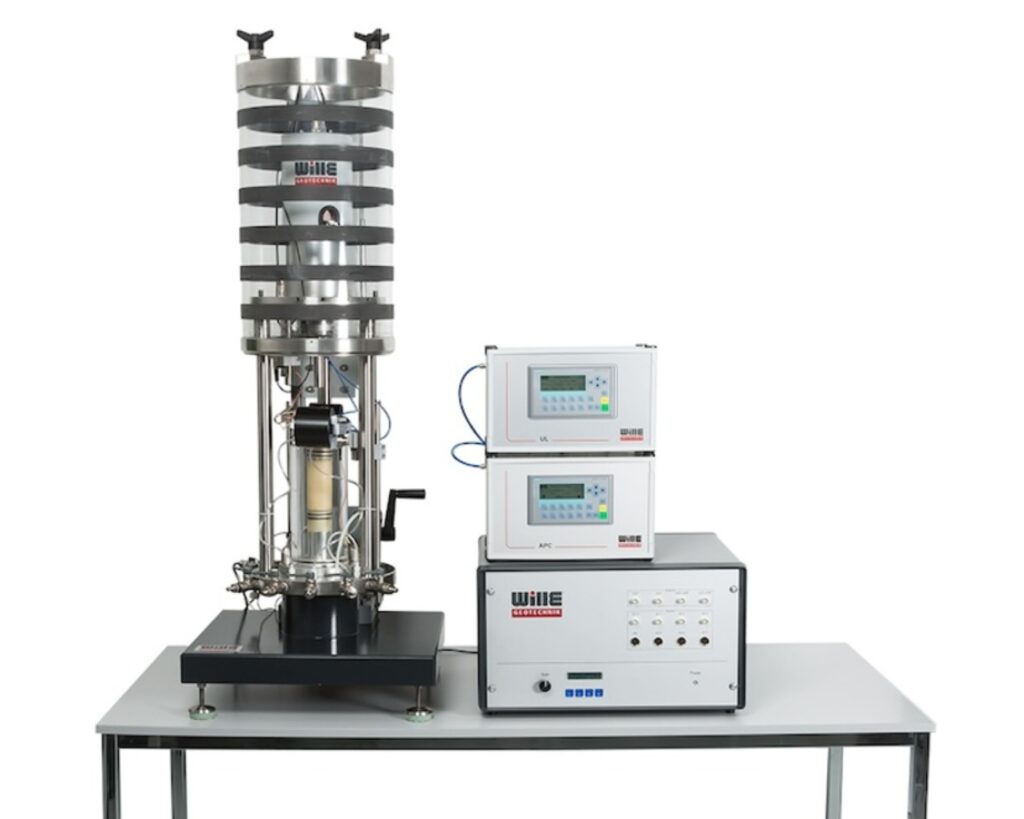
Resonant Column Device
This Resonant Column is a high-quality apparatus for measuring the low-shear Strain (less than 0.001%) or elastic modulus and damping properties of materials (e.g. wide variety of soils, rocks, Asphalt, etc) for solid- or hollow cylindrical samples under confined condition. It works based on the theory of wave propagation and used to vibrate the top of the soil specimen The device can work under two different boundary conditions, so called free-free and fix-free conditions, which depends minimum desired strain that operator wants to start RC experiment. This resonant column is equipped for isotropic and as an option for anisotropic tests. Also, this apparatus can be upgraded to perform experiments in unsaturated condition. Several other upgrading options are available on client’s request.
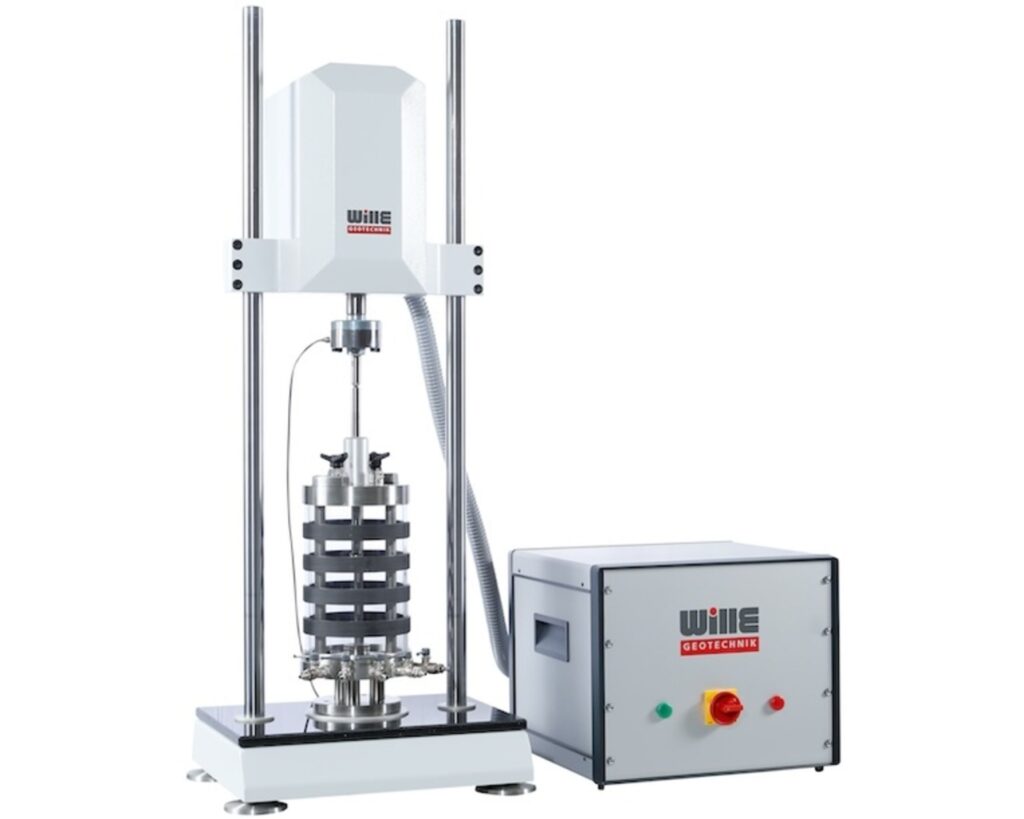
Resilient Modulus Testing System
The Fully Automatic Resilient Modulus Testing System (RMTS) is based on a closed-loop controlled cyclic tabletop electromechanical triaxial system, designed to simulate traffic loading conditions through precise control of axial load, displacement, and confining pressure. Compliant with AASHTO T 307-99, AG/T053, and AS1289.6.8.1 standards, the system can also perform a wide range of static and dynamic geotechnical tests, including stress path, cyclic strength, liquefaction, K₀ consolidation, and conventional UU, CU, and CD tests. Integrated GEOsys software enables fully automated testing, data acquisition, and analysis without operator intervention.
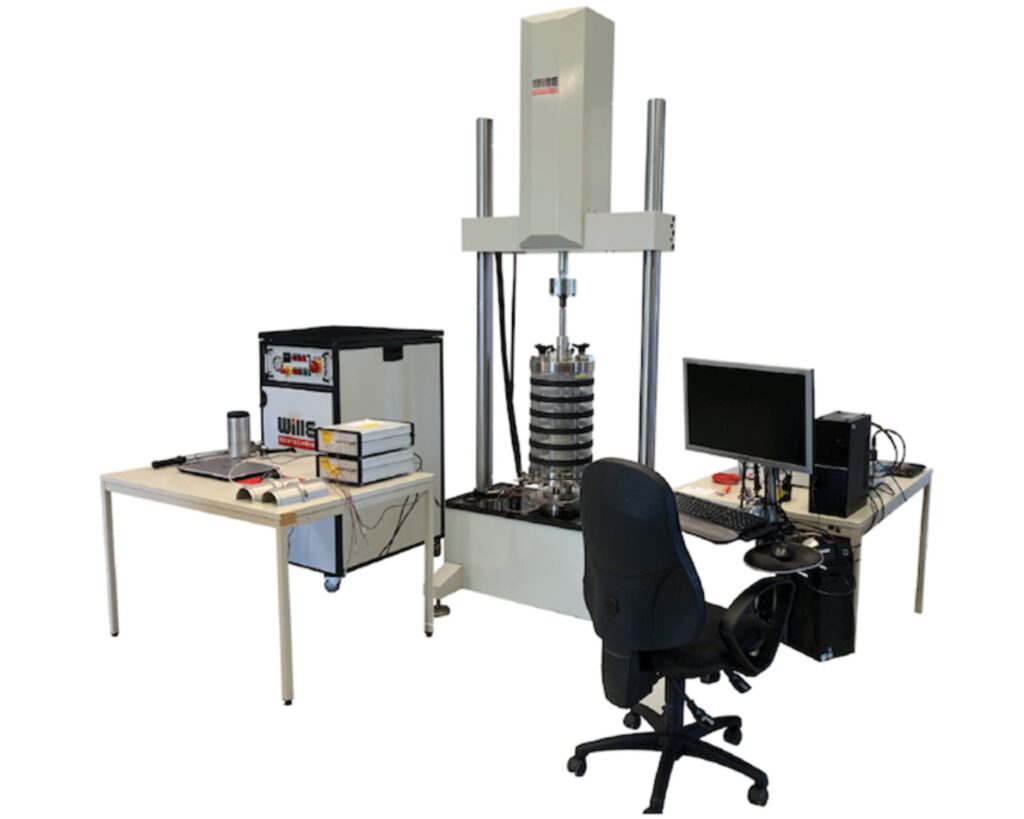
Servo Hydraulic Dynamic Triaxial Testing System
The Dynamic Triaxial Test System is a versatile servo-hydraulic testing solution designed for high-load and high-frequency applications on a wide range of specimen sizes under static or cyclic cell pressure. Its wide column spacing accommodates large triaxial cells, environmental chambers, and furnaces, while advanced control software enables the application of various loading waveforms, including sinusoidal, square, triangular, and user-defined signals. Available in table-top, floor-standing, and twin-actuator configurations, the system provides precise static and dynamic loading control for advanced geotechnical, rock mechanics, and material testing applications.
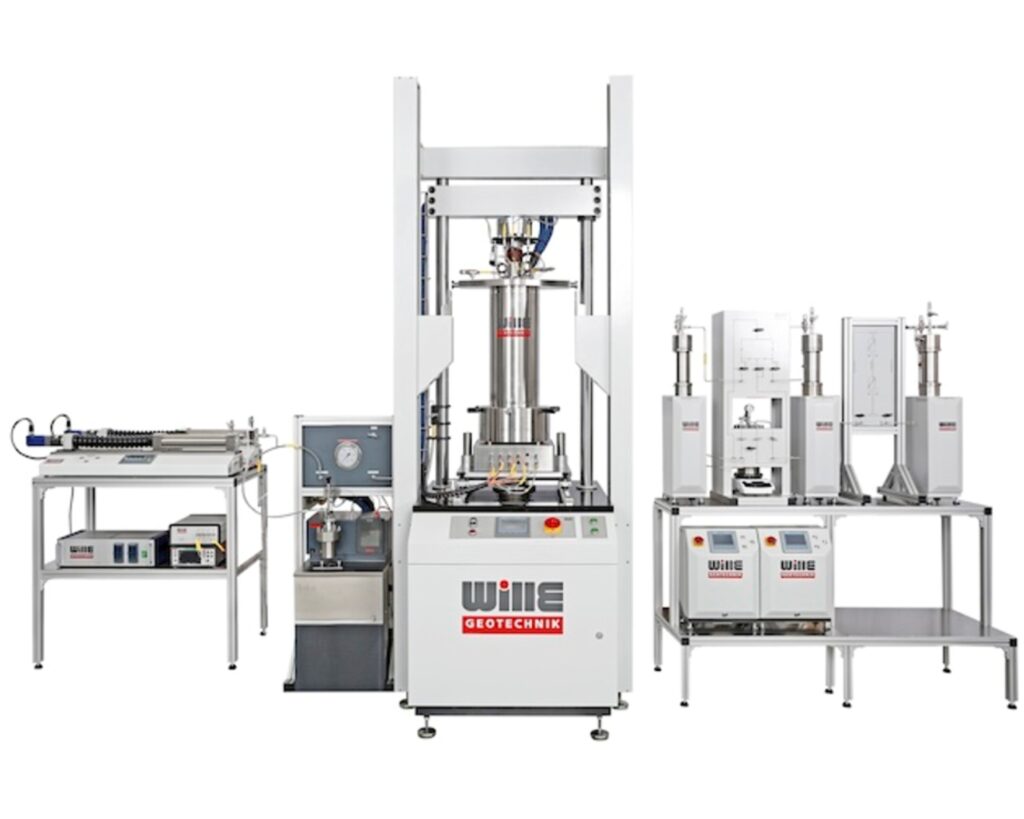
Gas Hydrate Triaxial Testing System
The Advanced Gas Hydrate Triaxial Test System is designed to investigate the mechanical behaviour of methane hydrate-bearing sediments under high-pressure and sub-freezing temperature conditions. It enables advanced geotechnical testing for applications in energy extraction, soil stability, and climate research. The system features enhanced pore pressure fluid management with capabilities for fluid mixing, flow control, and circulation, supporting a wide range of test scenarios, including hydrate formation, permeability studies, gas injection, and fluid circulation in saturated sediment samples.
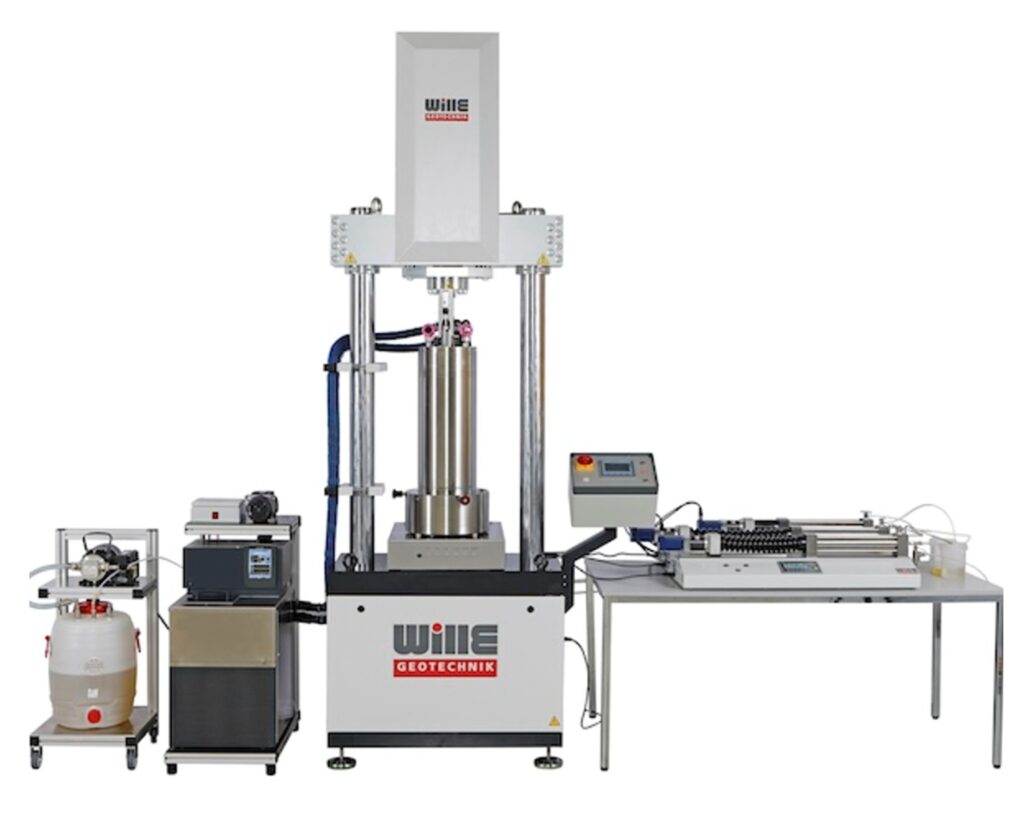
High Pressure-High Temperature Triaxial Test Device
The High-Pressure, Temperature-Controlled Stress Path Triaxial Testing System is a fully automatic solution designed for advanced geotechnical testing under extreme pressure and temperature conditions. It features an active triaxial cell based on the Bishop & Wesley principle, enabling direct stress control on the specimen. The system includes three high-pressure Volume Pressure Controllers (VPCs), an internal submersible load cell, pore pressure and displacement transducers, a lifting mechanism, and a temperature control unit. Constructed from stainless steel, the triaxial cell ensures reliable performance for high-pressure testing while providing precise measurement and control of axial load, cell pressure, and back pressure.
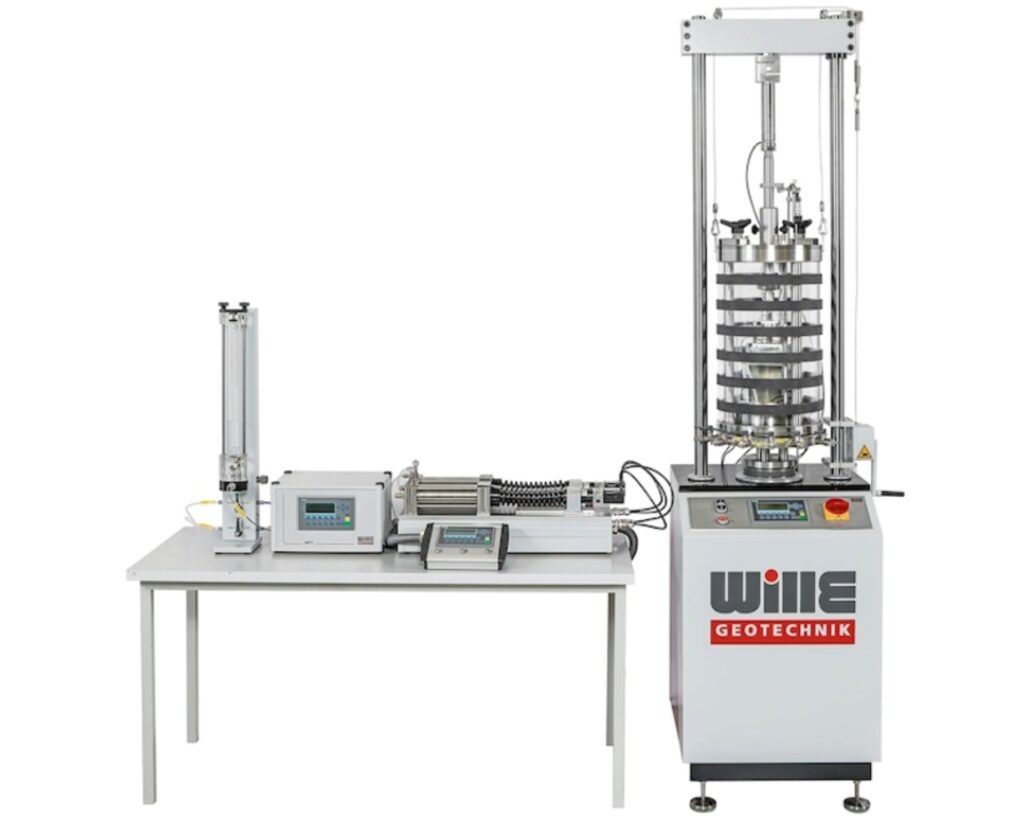
Static Triaxial Test Device (Floor type)
The Static Triaxial Testing System is a modular, high-quality stress path testing solution that can be configured with various sample adapters, triaxial cells, pressure plates, automatic pressure control units, volume measurement devices, transducers, and software modules. Built on a rigid two-column electromechanical load frame, it offers robust and reliable performance for both routine and advanced soil testing applications.